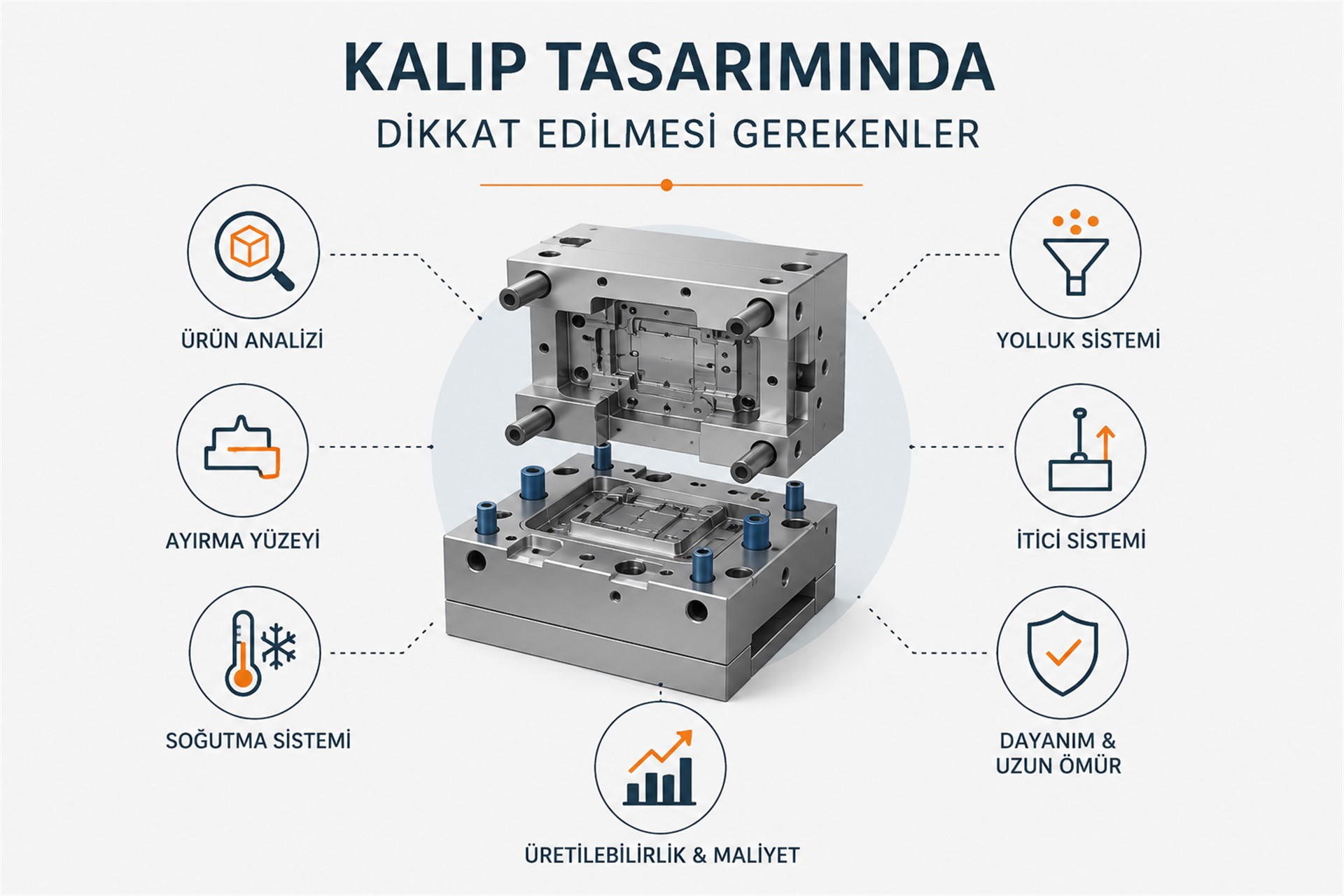
Key Considerations in Mold Design
Contact us via Whatsapp
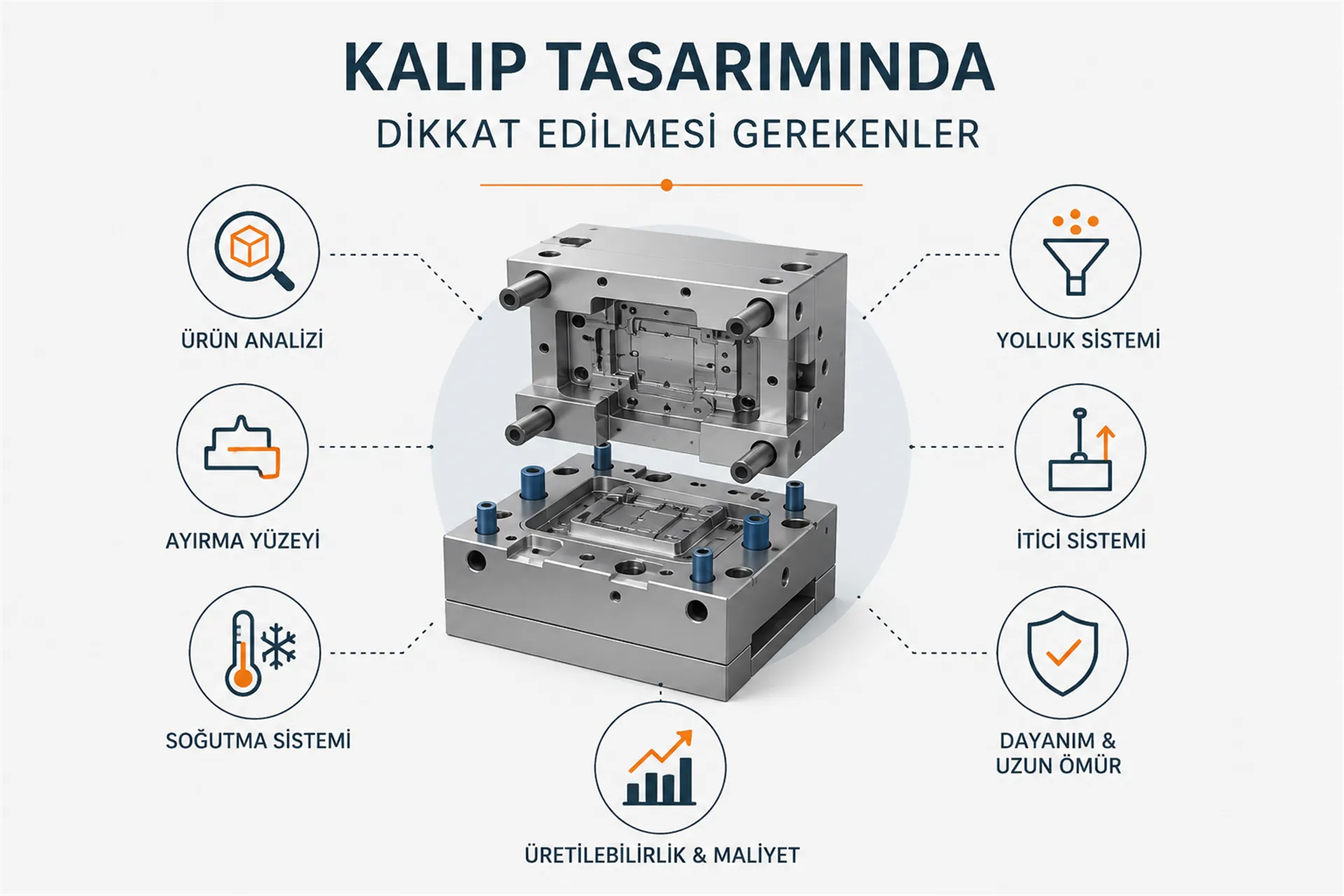
Key Considerations in Mold Design
Why is Mold Design Important?
Mold design is one of the most critical stages in plastic injection and industrial manufacturing processes. Product quality, dimensional accuracy, surface finish, and manufacturing efficiency are directly related to mold design quality. A properly designed mold improves production performance while reducing operational costs.
Modern industries such as automotive, medical, electronics, home appliances, and packaging require highly precise mold designs. In mass production environments, even small design mistakes may lead to serious manufacturing losses. For this reason, professionally engineered mold designs form the foundation of successful production operations.
Product Analysis and Technical Planning Process
A successful mold design process begins with detailed product analysis. The intended use of the product, technical specifications, dimensional tolerances, and durability requirements must all be considered during the design stage.
Analyzing product geometry before mold production is extremely important. Engineering solutions should be implemented to simplify the production of complex geometries. In addition, the product’s performance requirements and operating conditions must be evaluated carefully.
Professional manufacturing companies use CAD/CAM software systems to manage digital design processes and identify potential manufacturing issues before production begins.
Proper Material and Steel Selection
The quality of steel materials used in mold manufacturing directly affects production performance. Low-quality materials may quickly cause wear, deformation, and manufacturing defects.
Steel selection should be based on the technical requirements of the product. Factors such as heat resistance, hardness, and wear resistance are critical in determining mold lifespan and durability.
Especially in large-scale mass production, using high-quality steel provides long-term operational advantages while reducing maintenance costs. Therefore, material selection is one of the most important stages of professional mold manufacturing.
The Importance of Cooling System Design
One of the most critical aspects of mold design is the cooling system layout. A properly designed cooling system reduces production time while improving product quality.
Insufficient cooling systems may cause deformation, shrink marks, and dimensional inaccuracies in manufactured products. This negatively affects both production speed and product quality.
Modern mold designs use optimized cooling channels to provide homogeneous temperature distribution and improve overall manufacturing efficiency.
Production Efficiency and Cost Optimization
A successful mold design not only ensures product quality but also contributes to cost optimization. Reducing production time, minimizing waste, and lowering maintenance costs are all possible with proper engineering solutions.
Production efficiency is especially important for companies operating in mass manufacturing sectors. Professional mold engineering enables faster and more cost-effective production processes.
In addition, mold systems designed for easy maintenance support uninterrupted production and provide long-term operational benefits for businesses.
The Contribution of Modern Technologies to Mold Design
With the advancement of technology, mold design processes have become more digitalized and precise. CAD/CAM systems, 3D modeling technologies, and simulation software allow manufacturers to perform detailed analyses before production.
These technologies help identify potential manufacturing problems early and enable rapid design revisions. High-precision manufacturing is also made possible through advanced CNC machining technologies.
Modern mold production systems integrated with Industry 4.0 technologies continue to provide more efficient and higher-quality solutions for the future of industrial manufacturing.